


Bearers · People who take responsibility and pass it on
A shared direction continues through people who practise it, take responsibility in their work, and pass what they know to others.
Being a bearer is not a special title. It means applying what you know, stopping where your knowledge ends, answering for your work, forming someone beside you, and handing the duty on when the time comes.


Why this matters
A shared direction does not continue simply because it has been written down; it continues through people who practise it, take responsibility, and pass it on.
A good text can offer direction, but it cannot make everyday decisions, complete the work, correct mistakes, or form the next person. In RUYAH, a bearer is someone who makes a shared direction visible through life and work. They take responsibility without treating the trust as personal property, share what they know, stop where their knowledge ends, and hand the duty on when the time comes.
Continuity does not depend on one person remaining central. It grows when responsibility is learned and transferred among competent people.
Who can be a bearer?
A bearer is not a special rank, but a person who turns a shared direction into real responsibility.
A teacher, craftsperson, researcher, farmer, parent, designer, engineer, artist, student, or young person may carry part of RUYAH by taking responsibility within their actual competence and respecting the rights of others.
A person who does the work
Turns words into action, completes an agreed duty, and makes the outcome visible.
A person who knows their limits
Does not speak on every subject; says what they do not know and seeks relevant expertise.
A person who forms others
Does not keep knowledge to themselves; gives someone else room to observe, try, and take responsibility.
A person who remains accountable
Can explain the decision, the sources used, and what happened as a result.
Three clear movements
Receive the trust, carry it with competence, and pass it on.
Being a bearer is not a status. It is a responsibility repeatedly learned through service, correction, and handover.
Receive the trust
Treat the work not as personal property or privilege, but as a duty whose rights must be protected.
Carry it with competence
Use the necessary knowledge, experience, method, collaboration, and care; say clearly what you cannot do.
Pass it on
Record what matters, form new people beside you, and transfer the duty without abandoning it.
Knowing the boundary
Being a bearer is not fame, founder privilege, academic title, or a permanent right to remain central.
Visibility, followers, and office do not by themselves show that someone is carrying a responsibility well.
Not merely speaking for an ideaExplaining an idea well is not the same as living it, doing the work, and carrying its consequences. Not a heroic storyIt does not gather shared labour around one person; less visible contributions and distinct forms of expertise remain visible. Not lifelong authorityA duty is limited, reviewable, and transferable; the person steps back when needed. Not a claim to perfectionBearers can be wrong. What matters is not hiding the error, correcting it, and reducing the chance of repetition.
Different ways to contribute
RUYAH does not seek one type of leader; it brings different forms of knowledge, vocation, and service into shared responsibility.
One person may contribute in more than one way, but no person represents all knowledge, judgment, and practice alone.
Scholars and people of method
Carry depth in sources, concepts, and judgment; stop where knowledge ends and make relevant differences of view visible.
Teachers and guides
Turn knowledge into an intelligible learning path suited to age, language, and need.
Masters and practitioners
Pass on field experience, sound practice, and the responsibilities of a vocation through real work.
Builders and makers
Turn a question into content, tools, software, spaces, services, or a working solution.
Stewards of trust and care
Protect sources, rights, records, upkeep, feedback, and routes of succession.
Beginners, apprentices, and developing practitioners
Grow from observation and small tasks to regular production and guidance for others.
Three measures that belong together
A person must be able to do the work, protect the rights involved, and tell the truth about what they see.
Good intention does not excuse incompetence; expertise does not excuse betrayal of trust; loyalty to a person or institution does not justify hiding reality.
Competence
The knowledge, experience, language, tools, field understanding, and judgment needed for the duty.
Amanah
Protecting the rights of people, knowledge, sources, labour, and authority before personal interest.
Truthful witness
Reporting what is known and observed without distortion for interest, fear, or personal closeness.
Opening a vocation to shared life
A vocation is more than income or expertise; it carries responsibility towards people, society, and the consequences of the work.
KARDESH works through master–apprentice relations, vocational solidarity, shared questions, and transmission to a new generation.
Give the work its due
Carry quality not only at delivery, but through use, consequence, and continuing care.
Open the craft
Make experience a path others can learn, rather than a hidden form of superiority.
Work across vocations
Approach a shared question with law, education, design, technology, field practice, and other relevant expertise.
Support the next generation
Help children and young people through age-appropriate duties, safe relationships, and constructive feedback.
Passing on knowledge and responsibility
Work is not complete if it leaves no people, records, or relationships capable of carrying it forward.
Continuity grows through proximity, repetition, real duties, feedback, and planned handover—not through documents alone or dependence on one person.
Someone learning beside you
Every critical duty includes a second person who observes, asks questions, and gradually tries the work.
An intelligible record
Decisions, sources, methods, errors, and upkeep are recorded so that another person can understand the work.
Real responsibility
The learner does not remain an observer; they carry a task from beginning to end at an appropriate level.
Planned handover
Authority, access, relationships, and care are transferred with a clear time and account.
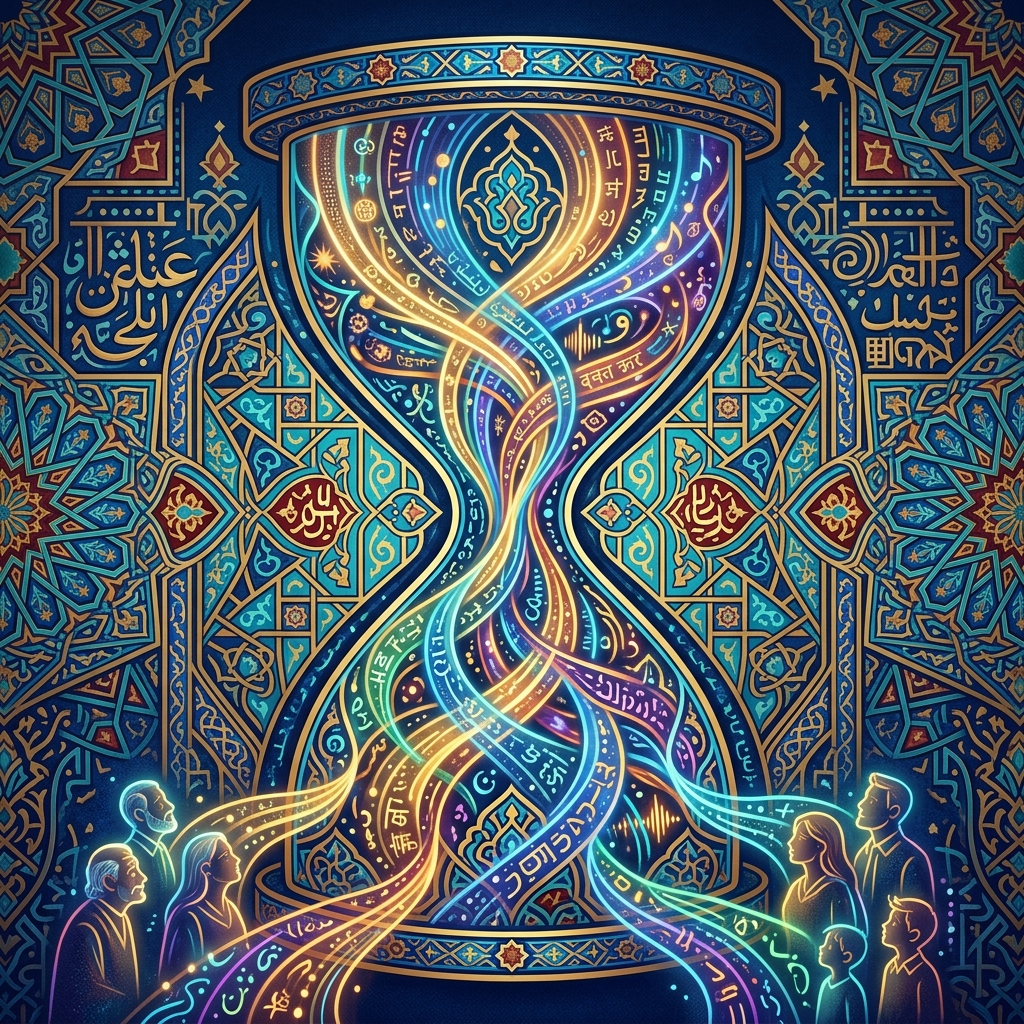
Across languages and generations
People take root in their own language, become neighbours in another, and join shared work.
A mother tongue is the primary ground for depth in concepts and field experience. Becoming a guest in a circle from another language and place then makes it possible to see how the same question is lived elsewhere. Translation tools may ease the first crossing, but people verify important concepts, decisions, and relationships. Children and young people also work with peers from different places in safe, age-appropriate, supervised circles.
Take root in one language, become a neighbour in another, and open what you know to shared life.
From a shared direction to real contribution
A bearer listens and learns, takes responsibility for a question, makes something, tests it, and carries its upkeep.
This is not a linear career ladder, but a cycle of work that returns to learning and sharing at every stage.
Circle
Learn the question by listening to shared language, distinct experience, and disagreement.
Explore CirclesMission
Take up a community or field need as a clear duty and shared aim.
Join a MissionKARDESH
Bring vocational knowledge together with other forms of expertise, apprenticeship, and real field experience.
Explore the vocational pathLabs and Build
Test the idea, make a working output, learn from real use, and improve it.
See the testing groundWAQF and care
Open suitable work to HAYR with rights, permission, access, correction, upkeep, and future bearers made clear.
Explore WAQFFrom the person to the duty
Being a bearer does not diminish people; it refuses to place the person before the shared duty and its accountability.
Visibility is not the same as responsibility. A sound path of continuity keeps contribution, objection, and handover open instead of concentrating knowledge and authority in one person.
A person-centred order
Built around visibility and indispensability
- The story gathers around one founder or leader.
- Knowledge, relationships, and authority are not transferred.
- Objection is treated as disloyalty.
- The institution stops when the person is absent.
Duty-centred stewardship
Built around competence, shura, records, and succession
- Contributions and less visible labour are acknowledged.
- Authority is limited, explainable, and transferable.
- Objection and correction are part of the work's safety.
- New people grow and the work does not depend on one person.
Before taking responsibility
A person or group gives clear answers to these questions before accepting a duty.
The questions do not distribute a closed title. They make the scope, grounds, accountability, and continuation of the duty visible.
What work and whose rights am I carrying?Are the purpose, scope, people affected, and limits clear? What grounds my competence?Can people see the knowledge, experience, language, field practice, method, and support involved? To whom and how am I accountable?Who can see the decision, sources, progress, errors, and consequences? When should I stop or seek help?Are the limits of knowledge, authority, time, safety, and conflicts of interest defined? Who is learning beside me?Is someone able to observe, try, and gradually prepare to carry the duty? How will the work continue after me?Are records, access, relationships, upkeep, and handover planned?
From responsible people to visible work
A bearer takes responsibility; Representation and IHSAN show how that responsibility becomes visible in the work itself.
Who carries a duty matters, but so does how the work makes its sources, methods, audience, consequences, and route of correction visible.
Deeper reading
Continue in the Külliyat Library
The portal summary offers direction; the Külliyat record keeps the source, context, and path to longer reading visible.
Atlas
RUYAH Concept Atlas
A concept atlas showing the relations among ADAB, EDEB, TE'DIB, SIDRA, MA, SEDD, İHSAN, SAHN, TEMSİL, MİLLET, and WAQF.
Open the Külliyat recordBook
RUYAH, SAHN.BA and SEMANIYYA Külliyat
A preparation record for a proposed Külliyat that would bring together sources related to RUYAH concepts and the portal architecture.
Open the Külliyat recordReport
BAI Human Oversight Report
A preparation record for a proposed report on human decision, contestability, reversal, representation, and responsibility in the use of models and automation.
Open the Külliyat record