


KARDESH · Profession Guilds
Grow roots in your vocation; become MİLLET across languages, crafts and generations.Grow roots in your vocation; become MİLLET across languages and generations.
A guild is more than a professional network. It keeps the EDEB, lived experience, sources and path of mastery of a vocation alive; then opens them to shared concerns, new tools and the next generation. It brings people into neighbourly work around the same RUYAH without making them alike.
Mother tongue · Guest language · Mission · Mastery · Next generation

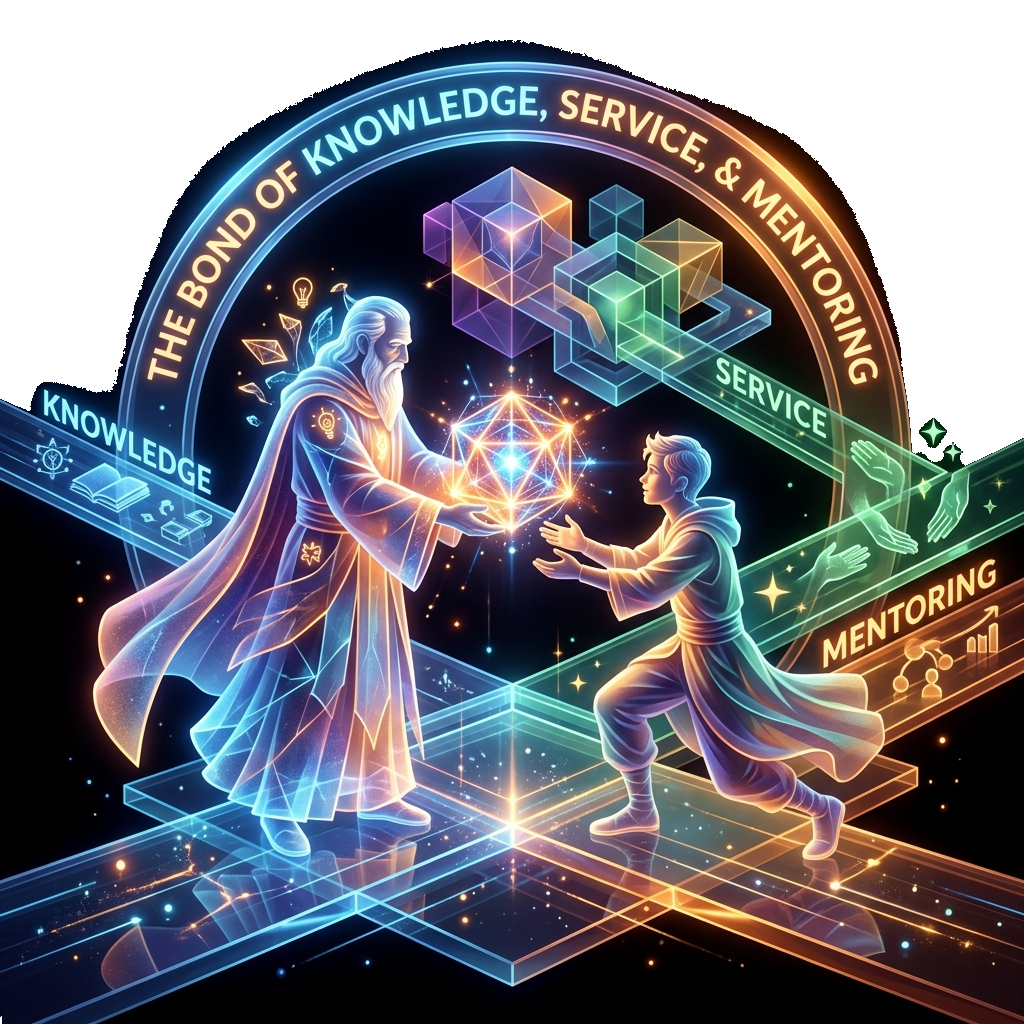
What is a guild?
A guild carries a vocation beyond job and title, keeping people, EDEB, knowledge, service and formation connected.
The knowledge of a vocation does not live only in documents or a single institution. It appears in a master's experience, an apprentice's question, the concepts of a mother tongue, a concern in the field, the tools in use and the outcome of service. A Profession Guild connects these through competence, objection, correction and trust; it does not claim them as the property of one centre.
A guild does not own a vocation; it is a circle of people carrying its trust together.
A necessary distinction
A guild is neither a closed circle nor an open crowd where every voice carries the same authority.
A guild is not
A centre of titles and control
- A source of general fatwa or absolute professional authority
- A job board or merely a professional network
- A company, customer pool or data collection centre
- A closed group that places a master's word beyond objection
A guild is
A circle of competence and shared service
- It keeps the EDEB and lived knowledge of a vocation alive
- It keeps mastery open to peer examination and correction
- It carries shared concerns across languages and professions
- It opens an age-appropriate path for the next generation
Four MİLLET bonds of guild participation
Deepen in your vocation without closing yourself to your own language; open it to other languages, concerns and generations.
1 · Home profession circle
Deepen the knowledge, concepts and field experience of your vocation in your mother tongue, together with the needs of your community.
2 · Guest-language circle
Join the same vocation in another language and geography as a guest or observer; listen to a different experience and gradually build a bridge.
3 · Mission circle
Without placing your vocation alone at the centre, carry a concern of MİLLET or the Ummah together with other fields of competence.
4 · Generation circle
Open your knowledge and experience to young Builders through suitable sources, small responsibilities, feedback and safe guidance.
How does a guild live?
A guild does more than hold meetings; it carries the past, present concern and next generation of a vocation together.
01 Listen to the vocation and its people
Understand the nature of the vocation, people in the field, local language, service setting and changing needs without classifying them only from outside.
02 Keep sources and lived knowledge visible
Carry books, documents, methods, craft, field experience and oral transmission with their sources and context; do not treat one text as the whole vocation.
03 Open a path of mastery
Understand Yamak, Çırak, Kalfa and Usta not merely by age or seniority, but through competence, responsibility, practice and the ability to raise others.
04 Carry a shared concern
Work on a real concern of the vocation with other professions, languages and fields through a Mission; do not turn your expertise into a one-eyed judgement.
05 Develop tools and representations
Develop education, guides, media, data, software or machine assistance under the responsibility of people in the vocation; do not put the tool in place of the vocation.
06 Correct the work and open it to HAYR
Open the work to peer, field, SEDD and İHSAN examination; where rights, permission, benefit and maintenance are clear, it may be shared through WAQF.
Usta–Kalfa–Çırak–Yamak
Each stage carries clearer responsibility, not simply greater authority.
Yamak · Supported first step
Observes, asks questions, takes safe small responsibilities and learns the EDEB of working with a team. It is the first participation stage for young Builders.
Çırak · Apprentice
Learns regularly in a defined vocation or production path, takes responsibility for sources and practice, and progresses with guidance.
Kalfa · Responsible practitioner
Can sustain a piece of work, supports newcomers, knows personal limits and builds a working bridge between Usta and Yamak.
Usta · Master
Carries competence, EDEB, consequences and the responsibility to raise others; remains open to correction and peer examination.
Caring for the next generation
Professional competence does not by itself authorise direct guidance of a child; that bond also requires educational competence and Child SEDD.
Every guild participant may contribute a concern, a source, project feedback, profession-shadowing or a demo review. But an Usta, Kalfa or guide working regularly and directly with children must also be prepared for age-appropriate communication, household visibility, privacy, supervised contact, records and incident response. Children and young people are not cheap labour, customers or uncontrolled test users; they are people entrusted to us, supported from the Yamak stage onward.
One of the first conditions of becoming MİLLET is to regard one another's children as a trust.
Neighbourhood across languages
A second language is not an entry barrier; it is a practice of becoming MİLLET that grows over time.
A person first takes root in the mother tongue. They enter a guild in another language as a guest with translation support, participate directly over time and build a bridge of sources, concerns and experience between the two circles.
Foundational preparation records
Three guild fields are preparing their sources, competence and safety conditions.
The Teaching and Education, Media and TEMSİL, and Children and Youth BAI Mastery and Guidance records describe the intended scope and responsibilities. A `Sourcing` label does not mean active membership, an appointed board, an open programme or professional authority.
3 guild records
Children and Youth BAI Mastery and Guidance Guild (EN)
To establish a competent guidance system that will ensure the continuous development of child and young Builders within the bridges of RUYAH, EDEB, security and profession.
- teacher
- Directory
- Expert
Media and TEMSİL Profession Guild
To prepare a shared vocational foundation for source, consent, privacy, synthetic media, publication history and correction tools.
- Profession Master
- Source and Correction Steward
- Privacy Steward
Teaching and Education Profession Guild
To prepare a shared vocational foundation for teaching, learning, educational content, child SEDD, source collections and teacher-support tools.
- Profession Master
- Field Source Steward
- Child SEDD Steward
What is shared and what remains entrusted
A MİLLET bond does not gather every person, institution and piece of knowledge into one centre.
Shared words and measures
RUYAH, the MİLLET covenant, essential EDEB, role boundaries, source clarity, objection, correction, SEDD and WAQF principles are shared across circles.
Trust carried by each language and guild
Each language circle carries its concepts, local experience, sources and professional decisions with responsible people; these are not erased in the name of a centre.
Trust carried by people, households and institutions
Private data, child records, professional secrets, contracts, institutional models and limits of use are not opened merely in the name of a public catalogue or shared knowledge.
Preparation and interest
Which vocation, concern or responsibility for the next generation would you like to carry?
Guild membership, guest-language circles and regular programmes are still in preparation. For now, you may share your vocation, mother tongue, second-language goal, the concern you carry and where you could contribute. This is not a promise of active membership, professional standing, a role, board appointment or programme acceptance.