


RUYAH > REVELATION CONSTANTS AND LIMITS
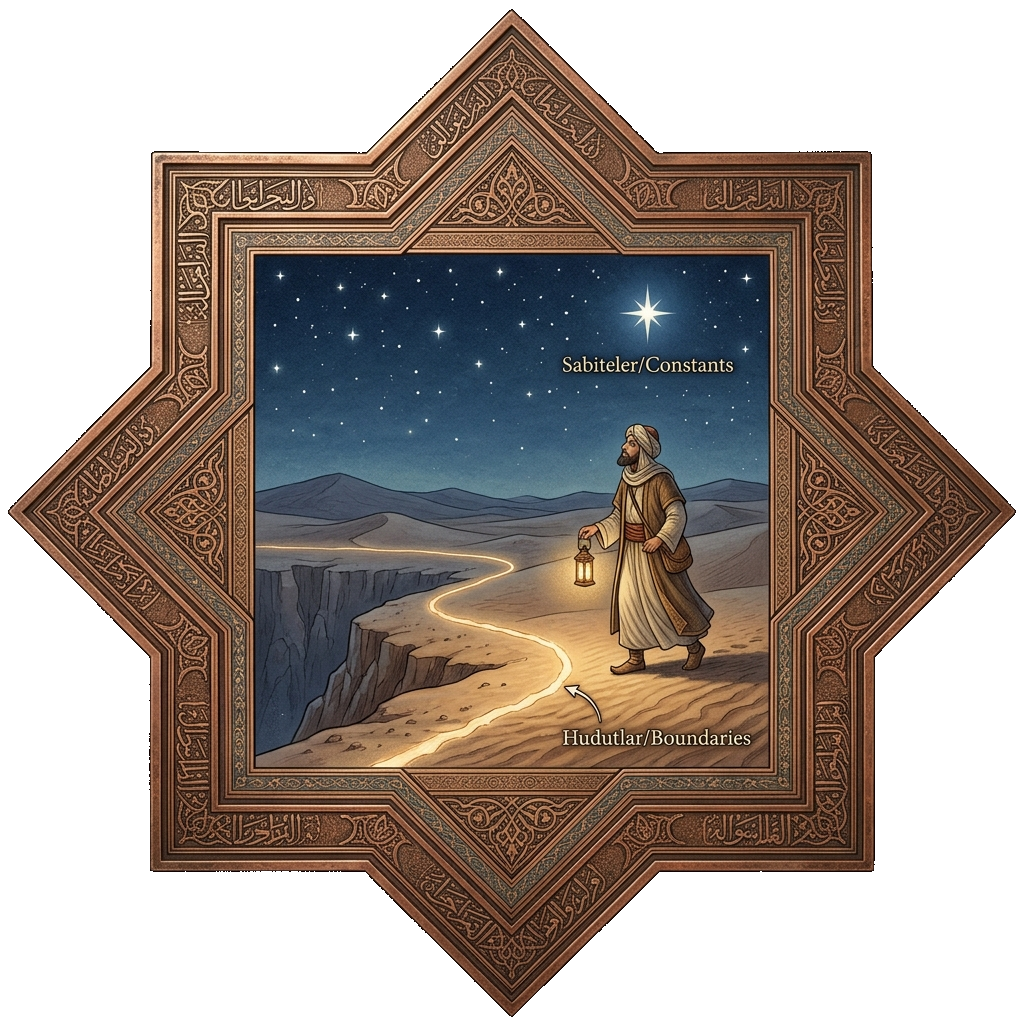
Constants our direction; Boundaries tell us where we should stand.
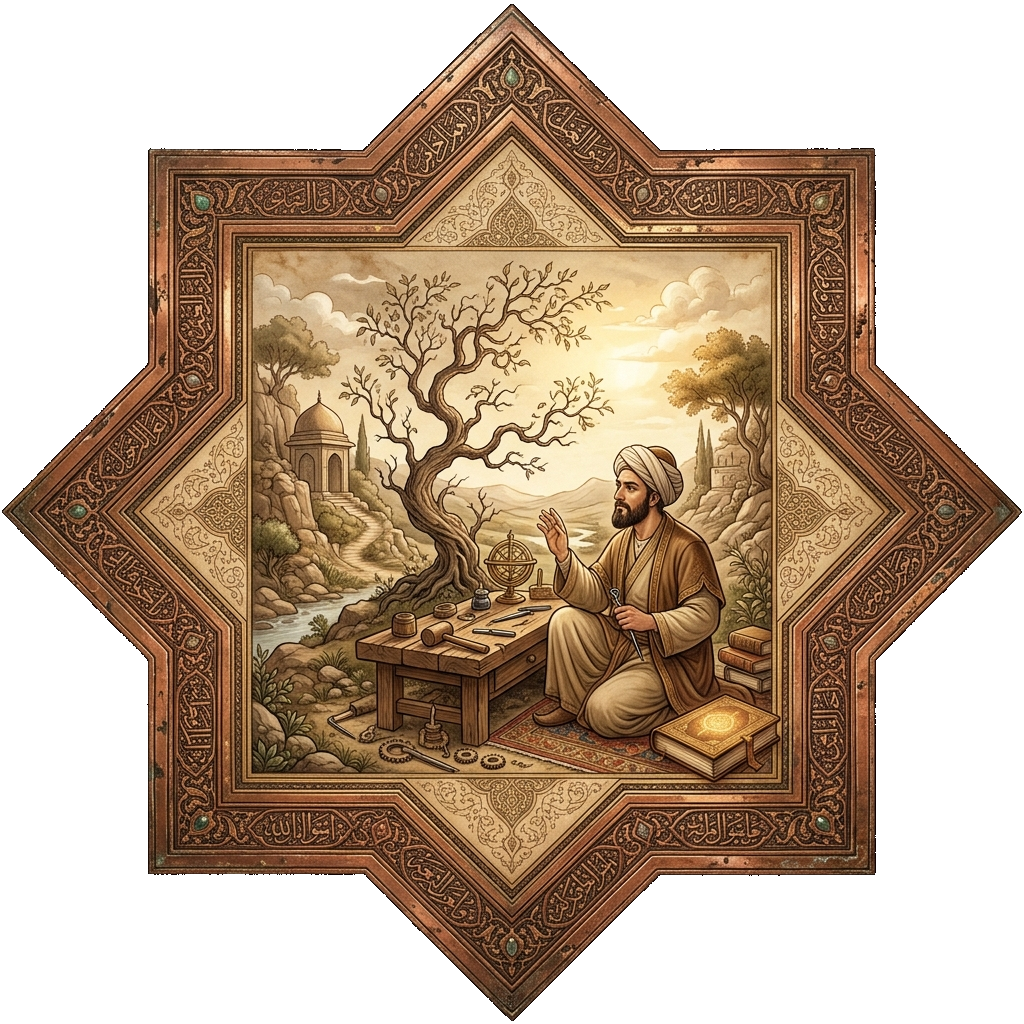
Man is not the absolute owner of the earth; The servant is the owner of trust and account. His knowledge, power and the technology he produces do not give him unlimited right to intervene. The Quran and the Sunnah indicate the direction and basic boundaries; RUYAH is our human effort to understand and live this direction in the issues of the age.
Main idea
Man can; but he does not have the right to do everything he can.
The Holy Quran and the authentic Sunnah guide man to the position of servitude, trust and responsibility. In this direction, people try to understand, decide and produce. But he cannot replace his own interpretation with revelation, his power with truth, or his product with truth.
Constants preserve direction; borders prevent excess; Tajdid seeks answers to the changing issues of life.
Know one's place first
The verse and hadith are not to bless a product; It is used as a basis to remind people of their status and responsibility.
RUYAH's source gate first asks not what we will do with the technology, but who the person using that technology is.
Man is a servant
Even though his knowledge and power increase, he does not have absolute power, ownership and disposition; He is responsible for knowing his place.
A person carries a trust
Body, family, child, nature, knowledge, goods and opportunities are not objects to be consumed unlimitedly; These are trusts to be accounted for.
People are responsible for the decision and the outcome
A machine can give suggestions; but the calculation of the intention, judgment, publication and resulting damage cannot be transferred to the machine.
Human production is prone to error
Interpretation, science, institution, software or model may approach the truth; nevertheless, it remains open to examination, correction and, when necessary, abandonment.
Separating our words from the Quran and the Quran
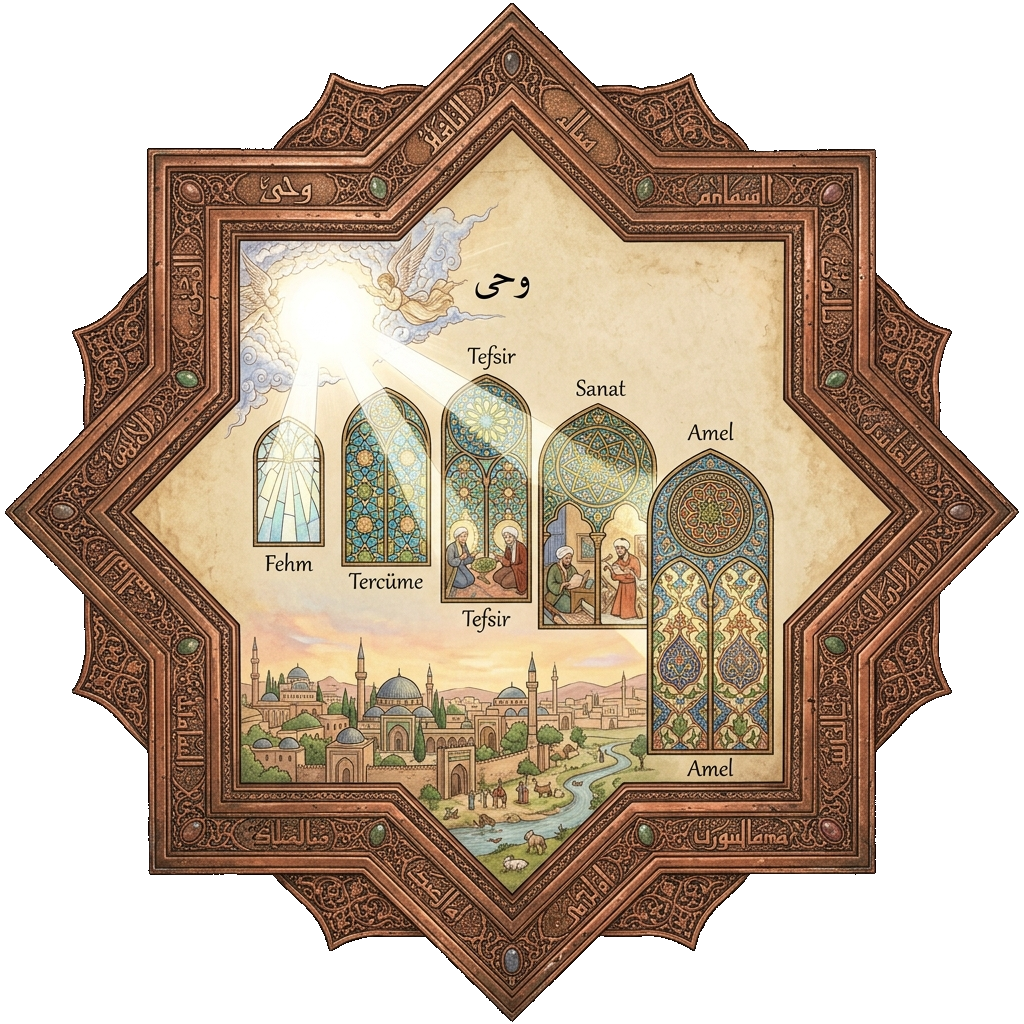
The wording of the Quran, its Turkish meaning, RUYAH expansion and our choice of application are not the same thing.
The Holy Quran in Arabic is actually the Quran. Turkish expressions, interpretations and explanations are efforts to understand that emerge within human language, science, time and method. RUYAH benefits from these studies; but he does not consider any of them to be the revelation itself or the last word that exhausts all meaning.
By revelation the human word about revelation; Separating the choice of constant from contemporary application is the basic ADAB of RUYAH.
Two different questions
Constant “What will I stick to?”; border “Where will I stop?” answers the question.
Constants preserve direction, purpose, and human understanding. While moving in this direction, boundaries prevent knowledge, power, intervention and behavior from turning into excess.
What do we adhere to?
Revealed constants
It is the source of servitude, trust, justice, purpose, nature, measure of truth and the position of responsibility of man.
- Source and measure of truth
- Servitude, trust and account
- Nature, justice and purpose
- ADAB and founding principles
What are we not overcoming?
Revealed boundaries
It is the protected border in the areas of information, judgment, intervention, privacy, rights, generation, body, property, damage and justice.
- Halal-haram and harm sensitivity
- Privacy, children and offspring
- Body, property and right
- The frontier of people, machines, data and representation
Five questions when looking at an issue
When faced with a new tool, information or intervention, the only question is “Can we do it?” We don't ask.
The place of man, the nature of existence, the principle we adhere to, the limit that should not be exceeded, and the mechanism that will protect this limit are considered together.
SIDRA
Where should we stand? It reminds us that knowledge, reason, intervention, judgment, technology and representation are not unlimited.
Read SIDRAMA
What is it before us? It corrects our view of people, bodies, households, nature and things as mere data, raw materials or resources to be used.
Read MARevealed constants
What do we adhere to? It establishes the basis for servitude, trust, justice, purpose and responsibility.
See constantRevealed boundaries
What should we not exceed? It protects the areas of privacy, rights, generation, body, property, harm and justice.
see the borderSEDD
How do we maintain this boundary in life? It establishes measures that work in physical space, digital space, data, model, institution and publication.
Switch to SEDDHow to use verse and hadith?
The source explains the location and boundaries of man; It does not turn into a label that glorifies our product.
We do not claim that a software, model, game or institution is directly verified by verses and hadiths. The source gives the direction; Human production remains a representation open to error and correction.
On basic human and border pages
Sourced and examined Revelation Opening can be used on doors such as RUYAH, SIDRA-MA, Constants-Borders and the place of trust of man.
The source must be visible
The Arabic original, surah and verse information or narration record, the source, context and research trace that prepared the Turkish interpretation are shown together.
The product is not verified by verse
The data set is not used as a verse-hadith box product approval for a model, software, game, institution or program; purpose, limit, source, human responsibility and correction method are explained.
The author of the Turkish word is indicated
The Turkish expression is not presented as the complete equivalent of the Quran itself or its entire meaning; The person or institution that prepared it and the version used are indicated.
How to publish the source?
The Opening Revelation whose source, context and scientific analysis are not completed will not be published.
This process is not to slow down the religious word; It works to prevent false certainty, unsourced transmission, and institutional interpretation from masquerading as revelation itself.
01 Source selection
Verifiable sources are determined for the verse, narration, translation and scientific context.
02 Fiqh and Usul examination
The source, context, type of relationship and contemporary application claim are examined by the authorized committee.
03 Layers separate
Revelation, Turkish interpretation, interpretation, RUYAH expansion and application example are shown under separate headings.
04 Examination trace is preserved
Publication will not be issued unless the reviewer, date, source version, subsequent review and correction note are registered.
Continue from here
Staying connected to the source does not mean absolutizing one's own understanding.
Truth and Representation limit human production; Constants and Tajdid explain how to act in the changing world without losing our direction.
Derin okuma
Külliyatta oku
Portal özeti yön verir; kaynak, bağlam ve uzun okuma külliyat kayıtlarında derinleşir.
Atlas
RUYAH Concept Atlas (EN)
Concept atlas showing the relationships of ADAB, EDEB, TE'DIB, SIDRA, MA, SEDD, İHSAN, SAHN, REPRESENTATION, NATION and WAQF. (EN)
Külliyat kaydını açKitap
RUYAH, SAHN.BA, SEMANIYYA Collection (EN)
Source corpus of RUYAH concepts and portal and microsite architecture. (EN)
Külliyat kaydını açRehber
SAHN.BA Web Portal Guide (EN)
Content, design and governance guide from RUYAH to the digital courtyard. (EN)
Külliyat kaydını aç